


Why Switzerland
Hospitality schools in Switzerland: where hotel school comes from
Switzerland is where the modern hotel school model began, and BHMS still teaches it the original way: a real, paid placement built into every single year of the degree, not an optional extra. Very few hospitality programmes elsewhere still do that.
At a glance
Hospitality schools in Switzerland: the short answer
Switzerland has more of the world's top-ranked hospitality schools than any other country: ten of the top 18 in the QS World University Rankings by Subject 2026 for Hospitality & Leisure Management are Swiss, including the whole top five. Most are private, teach in English and alternate classroom terms with paid work in hotels.
| QS 2026 rank | Swiss school | Location |
|---|---|---|
| 1 | EHL Hospitality Business School | Lausanne |
| 2 | Les Roches Global Hospitality Management Education | Crans-Montana |
| 3 | Glion Institute of Higher Education | Glion-sur-Montreux |
| 4 | SHMS – Swiss Hotel Management School | Caux |
| 5 | César Ritz Colleges Switzerland | Brig |
| 8 | HIM Business School | Montreux |
| 9 | Culinary Arts Academy Switzerland | Le Bouveret |
| 12 | BHMS – Business & Hotel Management School | Lucerne |
| 13 | IMI International Management Institute Switzerland | Horw |
| 17 | HTMi Hotel and Tourism Management Institute Switzerland | Sörenberg |
| 22 | EHG – Ecole Hôtelière Genève | Geneva |
Swiss institutions in the QS World University Rankings by Subject 2026, Hospitality & Leisure Management, ranks 1–22, names as QS publishes them (read 19 October 2026). The worldwide list: the best hospitality schools in the world. How to tell the Swiss schools apart: seven questions to compare them.
The tradition
A Swiss hotelier and a French chef
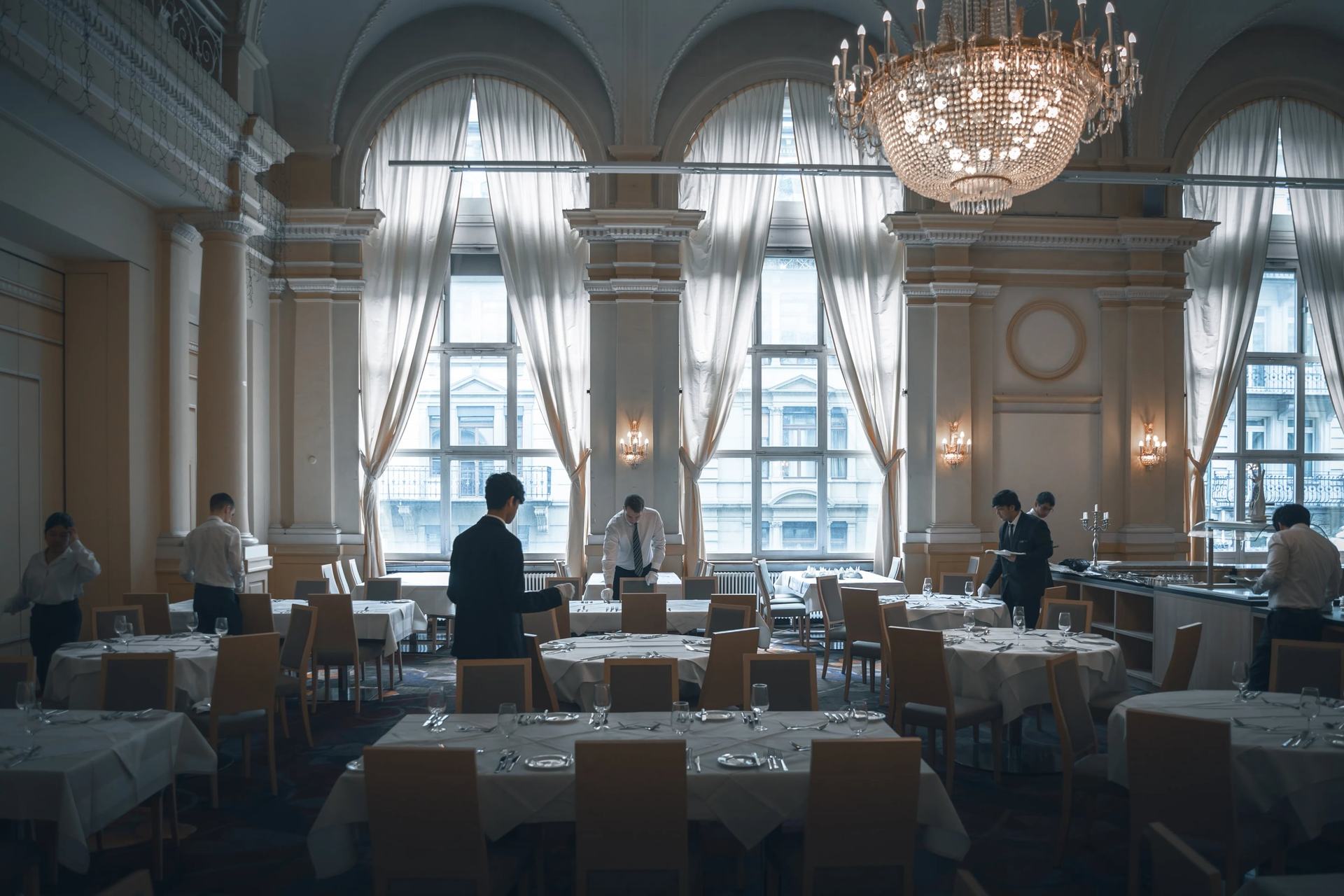
César Ritz was Swiss. In the late nineteenth century he worked in London at the Savoy with the French chef Auguste Escoffier, and the partnership between them shaped what we now recognise as modern luxury hotel-keeping and the professional kitchen brigade — the idea that a hotel is a trained system of departments rather than a large house with staff.
Switzerland's hospitality tradition grew out of that period and has been long and influential ever since. It is not a coincidence that the hotel-school format — classroom terms alternating with real operational service — reads as a Swiss export wherever you find it.
That is heritage, not a guarantee. What follows is the part that actually affects your three years.
The real argument
The placement is paid, and it is not a summer job
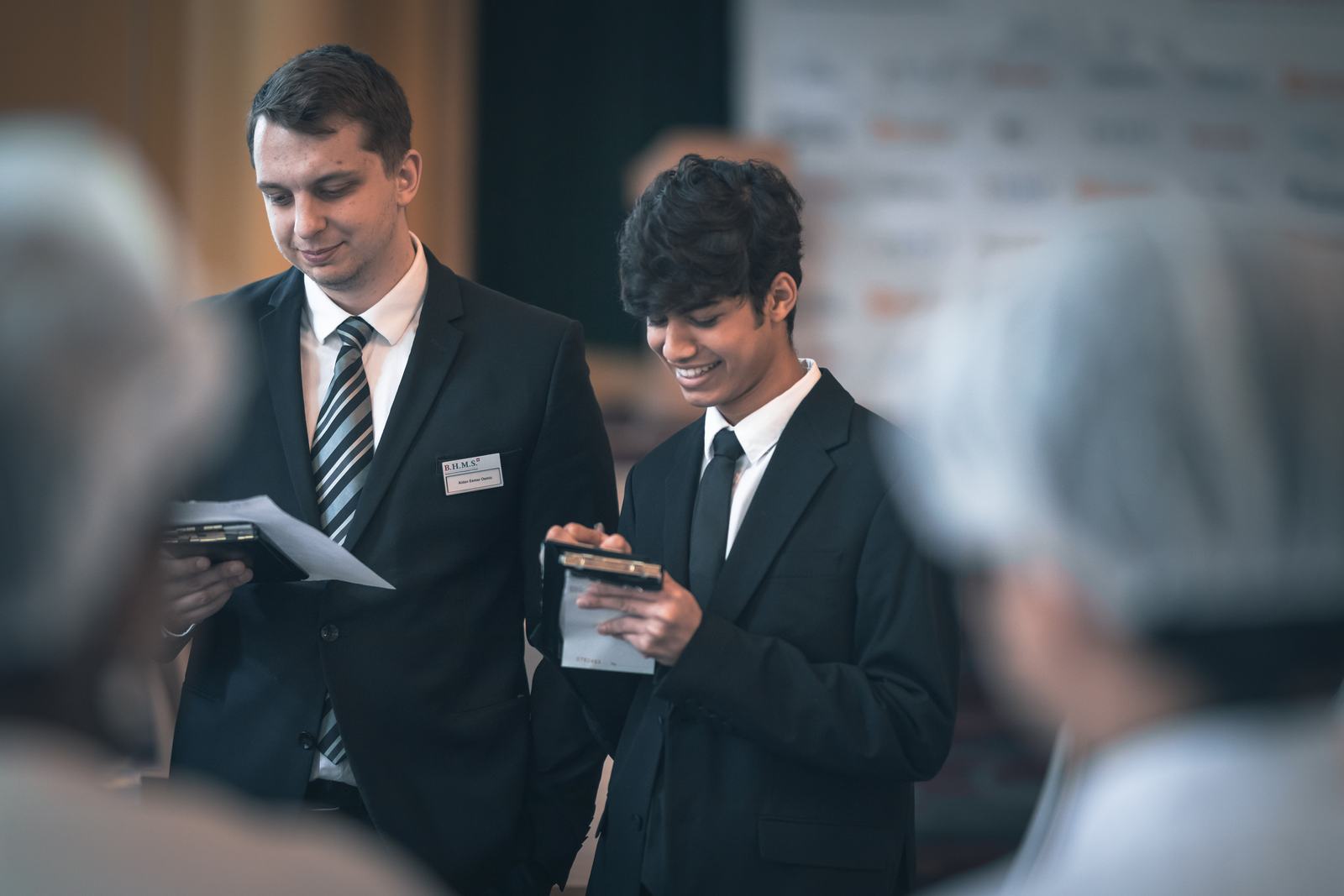
Most hospitality degrees elsewhere attach one internship, often unpaid, often short. The Swiss format alternates half-years, and the placement is a real position with a real payslip.
3
six-month placements across the bachelor — one after every academic semester, not one at the end.
18 months
of paid industry experience on your CV by the time you graduate.
CHF 43'000+
gross across the three placements, at the CHF 2'390 a month BHMS publishes for Switzerland.
Gross is not net. BHMS says so in its own FAQ: around CHF 1'500 a month where your employer provides accommodation and meals, and CHF 800–1,000 a month in a big city where they do not, after deductions for taxes, meals and insurance. The full internship arithmetic →
The working languages
You will study in English and work in a multilingual country
German, French, Italian and Romansh are all national languages here, and a hotel floor in Switzerland is genuinely multilingual on any given shift. For a hospitality career that is training you cannot really simulate in a single-language market.
All BHMS programmes are taught in English, so you do not need German to enrol. German communication is a Year 1 module and a language elective appears in Year 2 — and both are worth taking seriously, because BHMS states plainly that placements inside Switzerland depend very much on your German, French or Italian. Placements worldwide are also available.
Where placements happen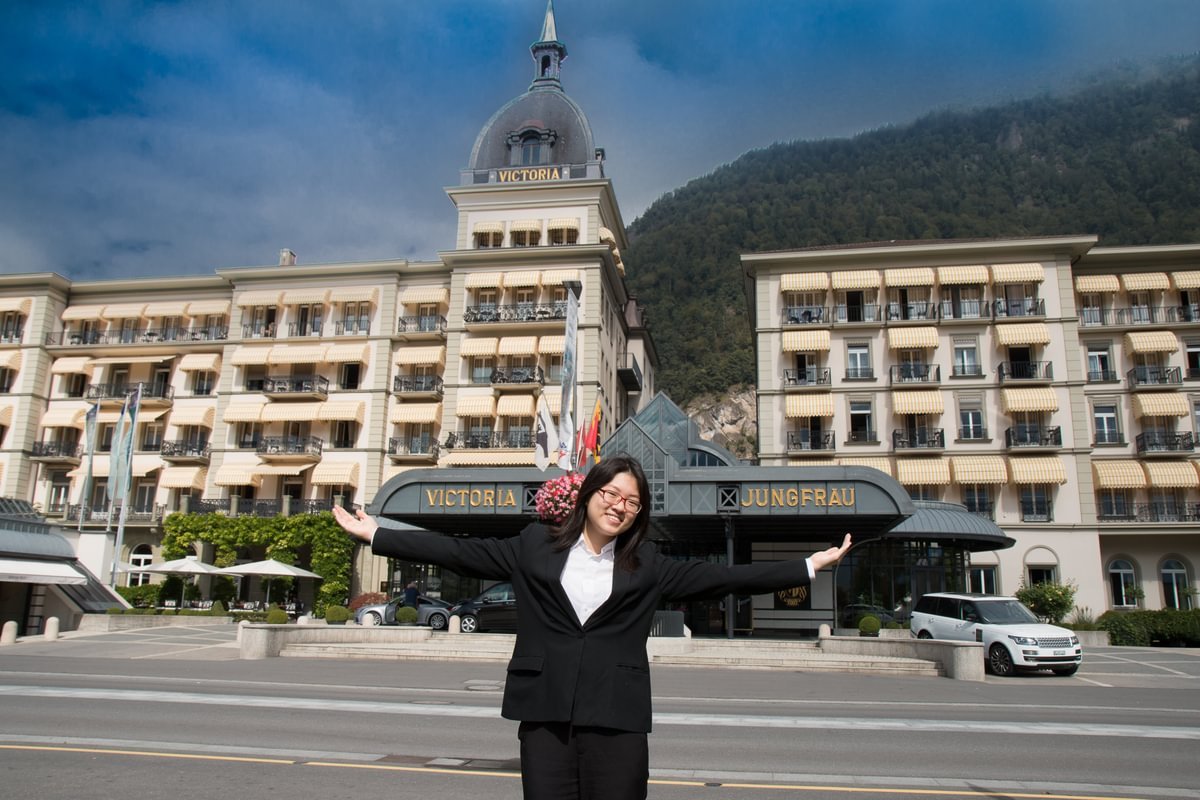
Where you are
Central enough that the industry commutes to you
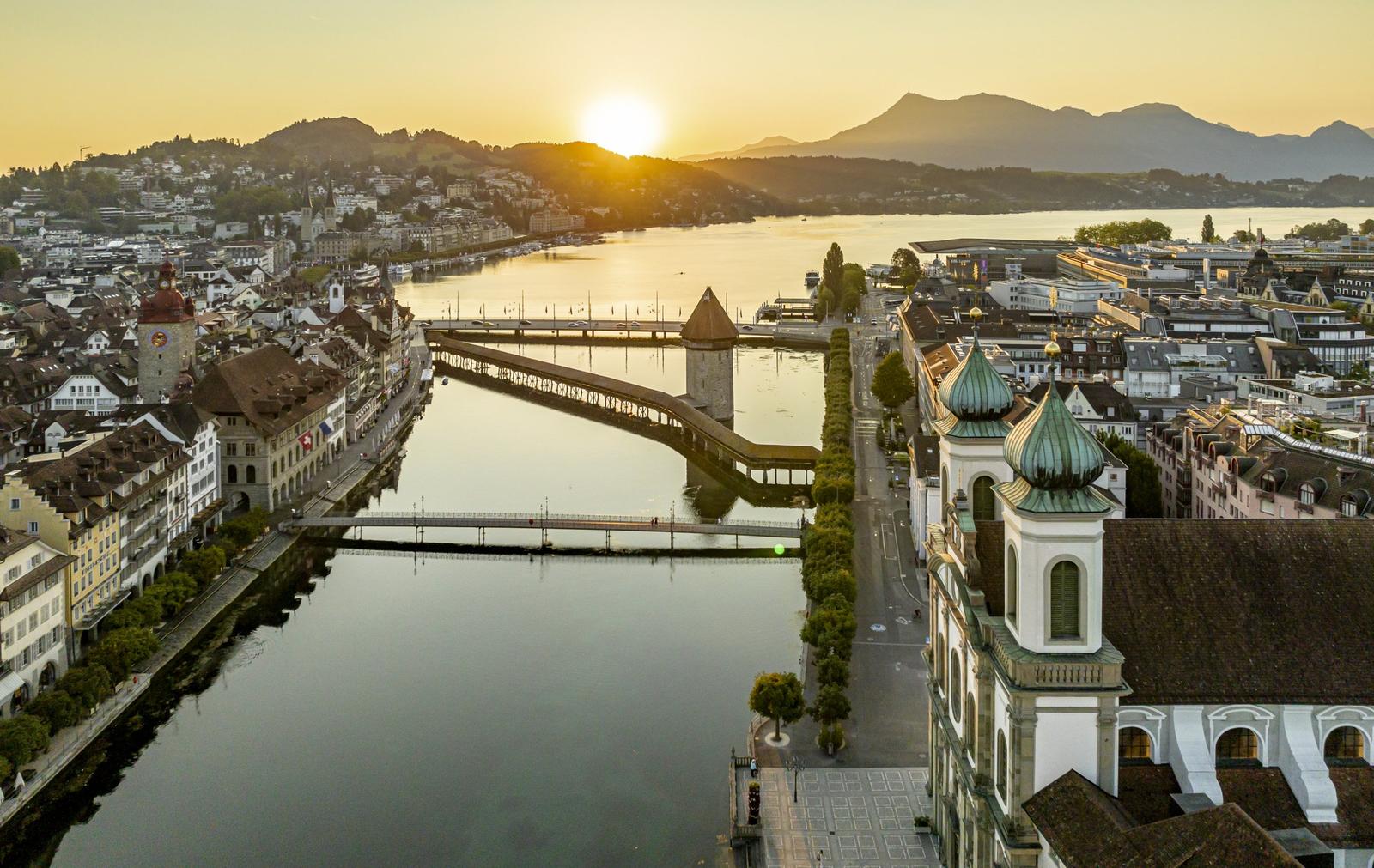
BHMS teaches the hospitality programmes on this site in Lucerne, at Guetschstrasse 2-6; the second campus is at Vulkanstrasse 106, Zurich. Lucerne sits in the middle of the country, about an hour from Zurich Airport by train.
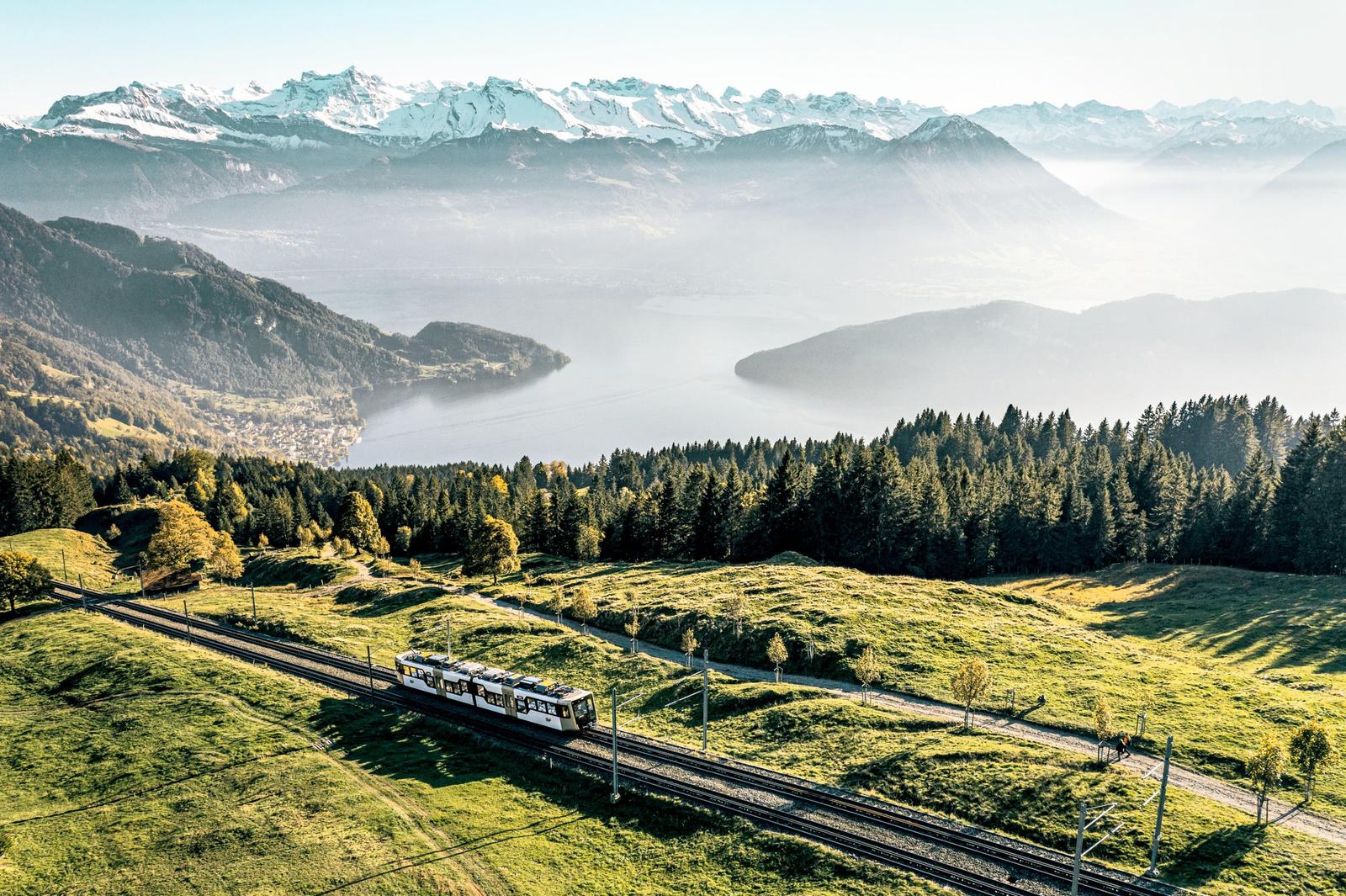
That matters more than the view. Switzerland's hotel industry is dense and much of it is within reach of the campus, so placement interviews and employer visits are a train ride rather than a relocation. The same rail network makes the rest of Europe reachable on a weekend, without a car and without an internal flight.
See the campus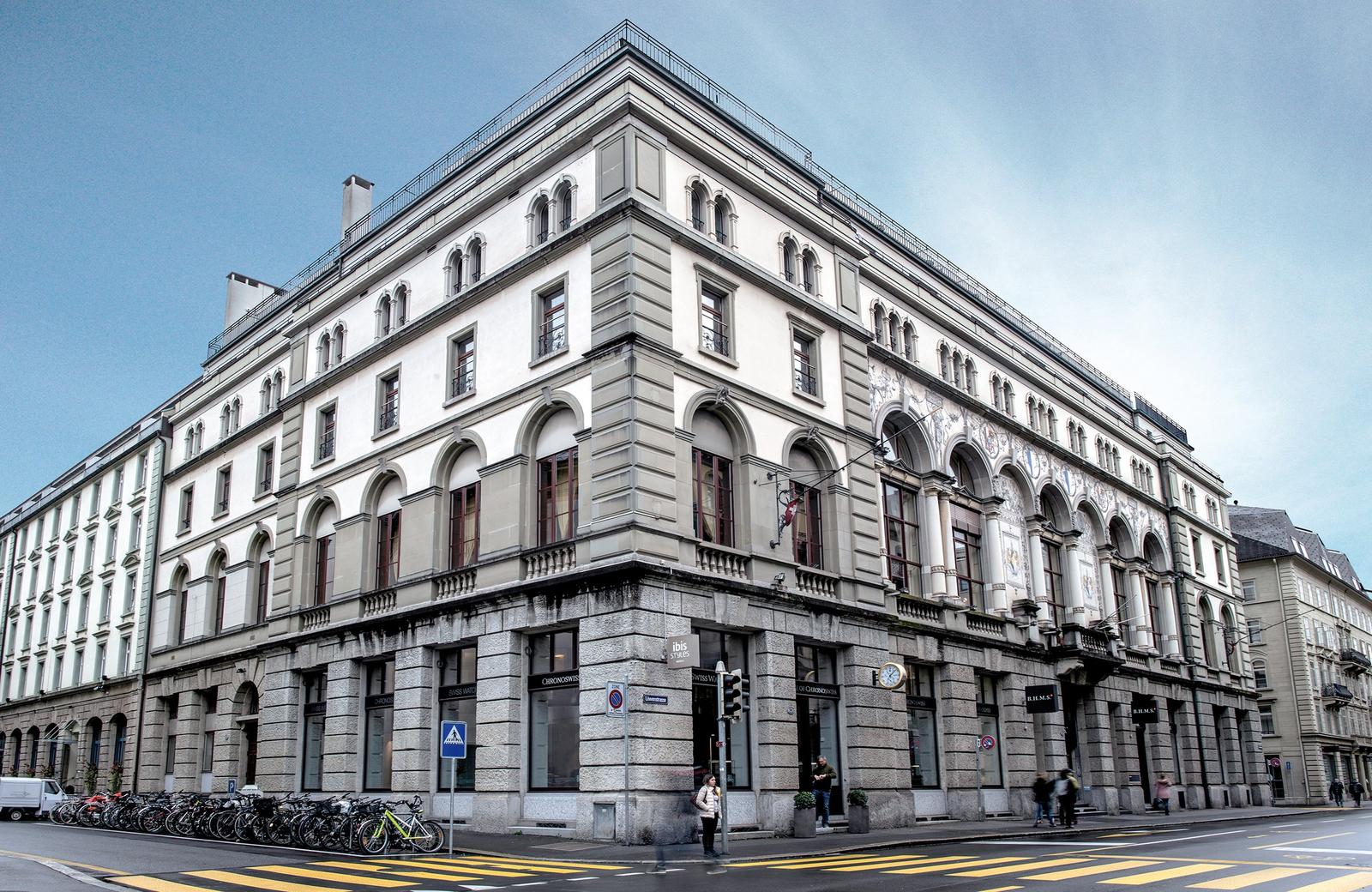
The honest version
Two things people don't tell you
There are real reasons to study somewhere else. Here they are, rather than buried in a prospectus footnote.
Switzerland is expensive
It is one of the more expensive countries in Europe to live in, and no brochure sentence changes that. What changes it in practice is the structure: accommodation, meals, health insurance covering accident, illness and medical treatment, your first airport pickup and visa support are all inside the programme fee, so the cost is agreed in advance rather than discovered month by month. Budget about CHF 500 a month for personal expenses on top — the figure BHMS publishes itself. Swiss citizens and C-permit holders receive a 30% tuition reduction on English-taught programmes of at least 12 months.
Swiss placements favour German, French or Italian speakers
BHMS states it directly: placements inside Switzerland depend very much on your German, French or Italian language skills. If you arrive with none of the three and never touch the language modules, your strongest options will be placements outside Switzerland — which are available, and paid at local market rates, but are a different experience from the one you probably came for. Treat Year 1 German as part of the job search, not a box to tick.
Planning the move end to end? The full guide to studying hospitality management in Switzerland covers costs, entry requirements, visas and a month-by-month timeline.
What you leave with
Swiss training, a degree that travels
The risk with any country-specific training is that it only counts in that country. That is handled here.
A UK degree as well
The bachelor is dual-awarded with Robert Gordon University, Aberdeen (UK). You train in Switzerland and graduate with a UK award alongside it.
#12 in the subject
QS World University Rankings by Subject 2026 — #12 worldwide in Hospitality & Leisure Management. BHMS also holds a QS 5-star institution rating.
The admission timeline
Allow 8–12 weeks for non-EU visa processing and 4–6 weeks for EU citizens. Visa and administrative support is included in the fee.
One limit worth planning around: students requiring a visa to study in Switzerland may not work outside the internships included in their programme. Costs →
Questions
Straight answers
What are the best hospitality schools in Switzerland?
In the QS World University Rankings by Subject 2026 for Hospitality & Leisure Management, the top Swiss schools are EHL (#1), Les Roches (#2), Glion (#3), SHMS (#4) and César Ritz Colleges (#5). BHMS in Lucerne is #12 worldwide. Ten of the top 18 schools in that ranking are Swiss.
Isn’t Switzerland very expensive?
Yes. Switzerland has a high cost of living and pretending otherwise would be dishonest. Two things change the arithmetic. First, the BHMS programme fee already includes accommodation, meals, health insurance covering accident, illness and medical treatment, your first airport pickup and visa administration, so the largest Swiss living costs are inside a price you agree before you arrive; BHMS advises budgeting about CHF 500 a month on top for personal expenses. Second, every academic semester is followed by a six-month paid placement — CHF 2'390 a month gross at Swiss rates — so part of the cost comes back to you while you study.
Do I need German to study here?
Not to study. All programmes are taught in English. But it matters for placement: BHMS states that internship placements inside Switzerland depend very much on your German, French or Italian language skills. That is why German communication is a Year 1 module and a language elective appears in Year 2. Placements outside Switzerland are also available if you would rather work in another market.
Why study hospitality in Switzerland rather than somewhere closer to home?
Two reasons that are specific to this country. Switzerland is where the modern hotel school model comes from, and the training tradition here is long and influential. And the Swiss format still builds a genuine paid position into every year rather than a short unpaid summer placement — at BHMS that is three six-month placements across the bachelor, 18 months of paid industry experience by graduation.
Can I take a part-time job alongside my studies?
No, if you need a visa. BHMS states that students requiring a visa to study in Switzerland may not work outside the internships included in their programme. The internships themselves are part of the programme, so they are permitted — but you cannot add a side job on top, which is another reason the paid-placement model matters here.
Does a Swiss qualification travel outside Switzerland?
The bachelor is dual-awarded with Robert Gordon University, Aberdeen (UK). You are trained in Switzerland and you graduate with a UK degree alongside the Swiss one, which is the point: the training is local, the paperwork is portable. BHMS also ranks #12 worldwide in Hospitality & Leisure Management in the QS World University Rankings by Subject 2026 and holds a QS five-star institution rating.
How long does it take to get into the country?
Allow 8–12 weeks for visa processing if you are a non-EU citizen, and 4–6 weeks if you are an EU citizen. Visa and administrative support is included in the programme fee. Swiss citizens and C-permit holders receive a 30% tuition reduction on English-taught programmes of at least 12 months.
Watch
See it for yourself
Next step
Three intakes a year. A degree that pays you back before you graduate.
Next intakes: 16 November 2026 · 22 February 2027 · 16 August 2027 · Lucerne, Switzerland
Every academic semester is followed by a six-month paid internship — CHF 2'390/month gross in Switzerland, three times across the bachelor. How the internship model works →