
Switzerland hospitality school: the language you'll need
The classes are in English. The hotel where you spend your paid internship may not be. Here is what the Swiss statistics say, and how to plan for it.
The Front Desk · Hotel Schools Abroad
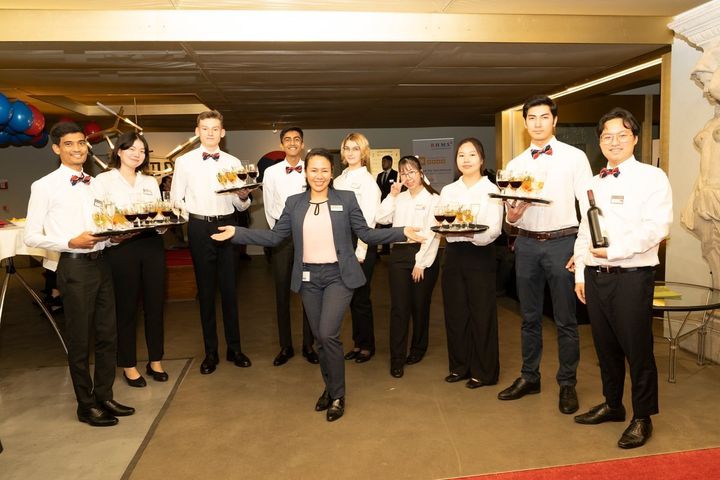
A Switzerland hospitality school teaches you in English, but your paid internship doesn't happen in a classroom. You'll work inside a Swiss hotel, and there the working language is often German, French or Italian. At BHMS, Swiss placements "depend very much on your German, French, or Italian language skills".
So before you compare schools, ask yourself a second question: which language will I work in for six months? The Swiss statistics can help you answer it.
What language does a hospitality school in Switzerland teach in?
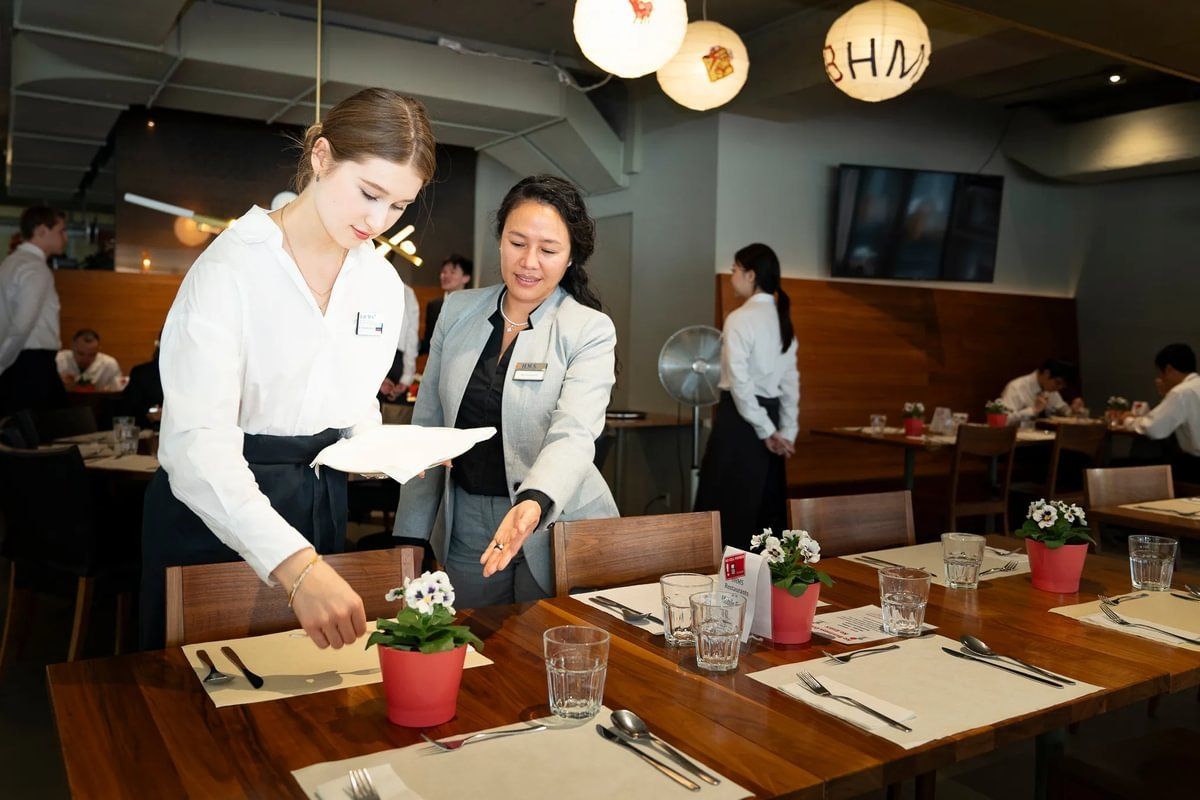
At BHMS you study in English, and the hospitality programmes run in Lucerne. The bachelor takes three years. Each year gives you six months of study followed by a six-month paid internship, so you'll have 18 months of paid work across the degree. You can leave with one of three exit awards: the Diploma, the Higher Diploma or the BA. BHMS awards the BA together with Robert Gordon University (UK).
From 1 January 2027 the internship pays CHF 2,404 a month gross, before deductions. Your first internship comes after your first six months of study. The Year 1 Diploma starts on eight dates in 2027, and the first is 11 January.
Language sits inside the timetable too. Year 1 includes a German Communication module, and Year 2 has a Language Elective.
Which languages do people speak in Switzerland?
Here are the 2024 main-language shares for the permanent resident population, from the Federal Statistical Office:
| Main language | Share, 2024 |
|---|---|
| German (including Swiss German) | 61% |
| French | 23% |
| Italian | 8% |
| Romansh | 0.4% |
| Languages that are not national languages | 24% |
The shares add up to more than 100% because each person can name up to three main languages.[2] German leads by a wide margin. French comes second, and Italian is a clear third.[2]
English is growing at work. In 2014, about 19% of employed people usually spoke English on the job, and ten years later it was 24%.[2] That helps you. It also means about three in four employed people still don't usually use English at work.[2]
Where are the hotels filling up?
Swiss hotels counted 43.9 million overnight stays in 2025, up 2.6% and the third record in a row. Stays rose in 11 of the 13 tourism regions.[1] Here are the regions where the statistics office gives figures:
| Region | Change in overnight stays, 2025 |
|---|---|
| Zurich Region | +253,000 (+3.5%) |
| Vaud | +170,000 (+5.8%) |
| Graubünden | +153,000 (+2.8%) |
The release also reports strong growth in the Basel Region and in Lucerne/Lake Lucerne, but it gives no figures for them. Geneva had the highest net room occupancy at 67.9%, and the Basel Region had 60.3%.[1]
Overnight stays show where guests went. They don't show where hotels hire or which language a team works in, so that question is one to put to each hotel.
What does this mean for you?
If you already speak German, French or Italian, tell the placement team early. It's your biggest advantage, and the placement service is part of your fee.
If you speak only English today, you have two jobs. Make the most of your first six months of study, because that's when the German Communication module runs. Then ask for the working language of any hotel before you accept it, not after.
Pay depends on place too. BHMS's own FAQ says a countryside internship, with employer-provided accommodation and meals, can leave you around CHF 1,500 a month after deductions. In a big city without accommodation, you typically keep around CHF 800-1,000.
Placements are also available outside Switzerland. The CHF 2,404 gross a month is the figure for placements in Switzerland.
One thing we can't give you is a placement rate. BHMS publishes none, so we won't invent one.
What should you do next?
Write down the languages you speak, then read the internship page to see how placements and pay work. Check the fee table for the full cost of each year, and the Year 1 Diploma page for the first modules. When you're ready, the application page is your next step.
Not sure which programme fits you?
Answer a few questions in the 2-minute fit check and talk to a real person.
Sources
- Federal Statistical Office (BFS), via admin.ch: Hotellerie: Rekord bei den Logiernächten im Jahr 2025 (definitive 2025 hotel statistics, press release of 25 February 2026)
- Federal Statistical Office (BFS): Sprachen (languages in Switzerland)
Read next
 Studying hospitality ·
Swiss HF diploma in English: which schools?
Only a few schools teach the federal HF hotel diploma in English, and not every school that markets it holds the title yet. Here is how to tell the difference. Studying hospitality ·
Best hotel management school in the world: QS 2026
EHL says QS 2026 puts it first. What that ranking measures, who sits behind it, and what to ask before you pick a school. Studying hospitality ·